

Where to Find Stunning Affordable Engagement Rings Below $1000

Finding an engagement ring that looks spectacular without breaking the bank is possible with the right strategy, focusing on stone type, setting, and smart shopping. This guide explains how to find engagement rings under $1000 by prioritizing visual impact—what "stunning" means on a budget—and walks through the trade-offs that deliver the biggest sparkle per dollar. You will learn which stones and shapes maximize perceived size, how settings can amplify brilliance, and where to search online using effective filters and financing when needed. To facilitate direct product sales to customers and provide an easy online shopping experience, this article also points to curated retailer types and practical purchasing steps that help convert interest into confident buys. Read on for actionable comparisons, EAV tables that simplify decision-making, and buyer checklists designed for value-first shoppers looking for affordable engagement rings under $1000.
What Are the Best Affordable Engagement Rings Under $1000?
Affordable engagement rings under $1000 succeed by substituting lower-cost stones or optimized settings for pure carat weight while preserving eye appeal. By choosing lab-grown diamonds, moissanite, or alternative colored gems, buyers can retain diamond-like brilliance or striking color at a fraction of natural-diamond pricing. The key benefit is maximizing visual impact—larger-looking centers, brighter sparkle, and flattering shapes—while accepting trade-offs like different hardness or grading conventions. Below we compare the main stone categories to help shoppers prioritize sparkle, durability, and ethical preferences in their budget search.
Different stone types offer distinct trade-offs between look, durability, and cost:
| Stone Type | Typical Carat / Look | Price Range & Pros/Cons |
|---|---|---|
| Lab-Grown Diamond | Similar appearance to natural diamonds; seen in 0.25–0.75ct ranges for <$1000 | $500–$1,000 for smaller or lower-graded specs; pro: diamond properties; con: slightly higher cost than alternatives |
| Moissanite | High brilliance and fire; often appears larger for same carat equivalent | $100–$700; pro: exceptional sparkle and affordability; con: different optical properties vs diamond |
| Sapphire (color) | Rich hue, durable (hardness ~9) in small center stones | $200–$900; pro: color and durability; con: less traditional look for some buyers |
| Morganite | Peach-pink tone, romantic aesthetic, softer (Mohs ~7.5) | $150–$600; pro: feminine color at low price; con: needs protective settings for daily wear |
This table clarifies how each stone maps to budget expectations and buyer priorities, and the next section explains lab-grown diamond value specifically.
Which Lab-Grown Diamond Rings Offer the Best Value Under $1000?
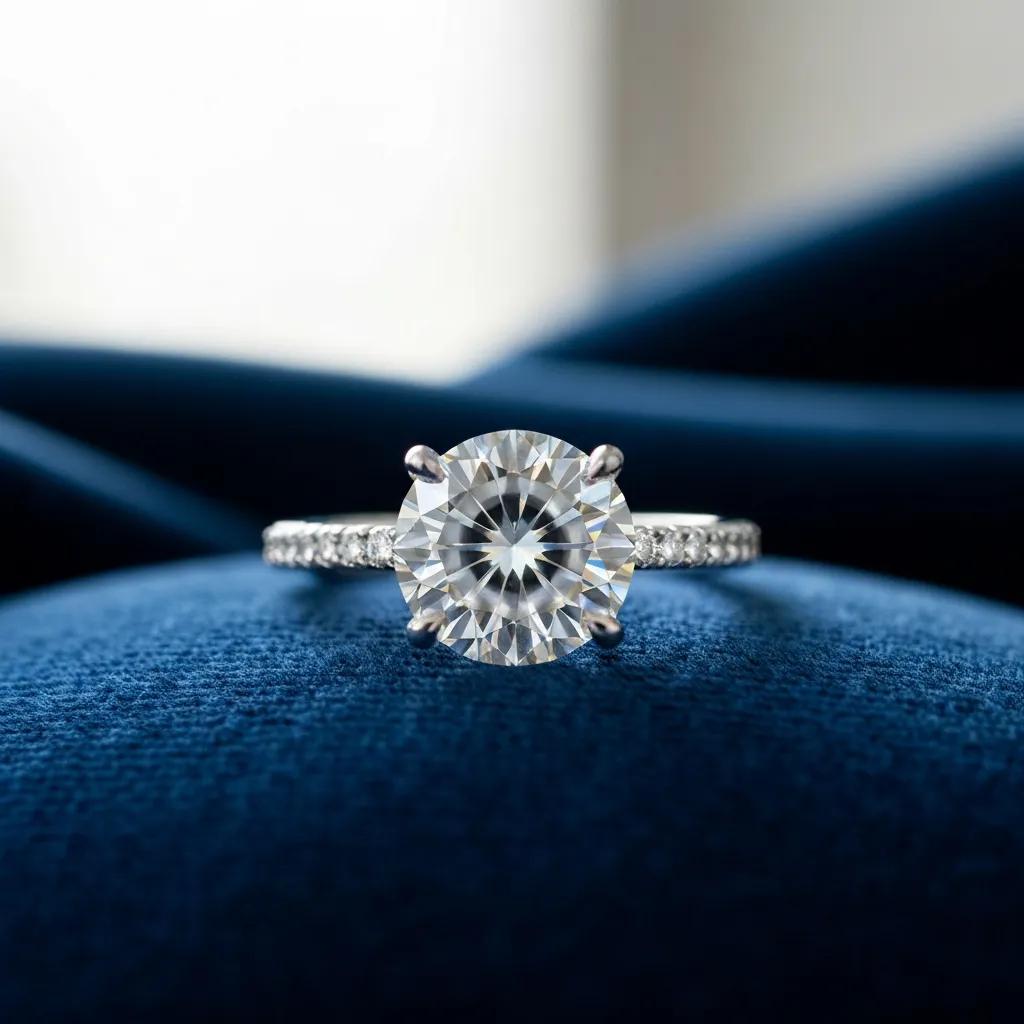
Lab-grown diamonds offer diamond-equivalent optical and physical properties while often costing substantially less than mined stones, making them a top choice for budget-conscious buyers who want a traditional diamond look. The mechanism driving savings is controlled production, which reduces rarity premiums and allows larger or higher-cut stones within the <$1000 constraint. For best value, prioritize cut quality for maximum brilliance, accept mid-range clarity and color if invisible to the eye, and use elongated shapes to increase perceived size. When shopping, use filters for "lab-grown," cut grade, and carat range to find specimens that deliver sparkle over raw carat weight.
The emergence of lab-grown diamonds offers a compelling blend of ethical sourcing and cost savings, making them a prime choice for budget-conscious shoppers.
Lab-Grown Diamonds: Sustainable and Cost-Effective Alternative to Mined Diamonds
Lab-grown diamonds present a sustainable alternative to deep-seated diamond mining by simulating natural conditions to produce the precious stones above ground in a span of six weeks. The emergence of lab-grown diamonds in Surat and its potential repercussions are examined in this article. The paper describes the technological process by which lab-grown diamonds are produced by simulating the underground natural diamond formation process through the application of high pressure and heat to diamond embryos in plasma reactors. This allows for up to a 30% reduction in the cost of diamond production compared to conventional mining methods.
To choose wisely, set search priorities: cut first, then shape, then clarity/color, and use settings that boost perceived size. Those choices lead naturally into considering moissanite as an alternative and how it compares on sparkle and cost.
How Do Moissanite Engagement Rings Compare for Budget Buyers?
Moissanite delivers very high brilliance and refractive fire that often outshines diamonds in perceived sparkle, which makes it an excellent value for buyers prioritizing visual impact under $1000. The reason is moissanite’s optical properties—higher refractive index—so smaller stones can appear very bright and eye-catching. Typical moissanite center stones in well-made settings fall well under $1000, enabling larger apparent size compared with similarly priced diamonds. Durability is strong for everyday wear, but buyers should accept a different look under close inspection and choose high-quality cuts to avoid color shifting in certain lights.
Knowing moissanite’s strengths and aesthetic differences helps you weigh it against lab-grown diamonds and colored stones, and informs setting choices that enhance size and sparkle for budget rings.
How Can You Choose Stunning Engagement Ring Settings Under $1000?
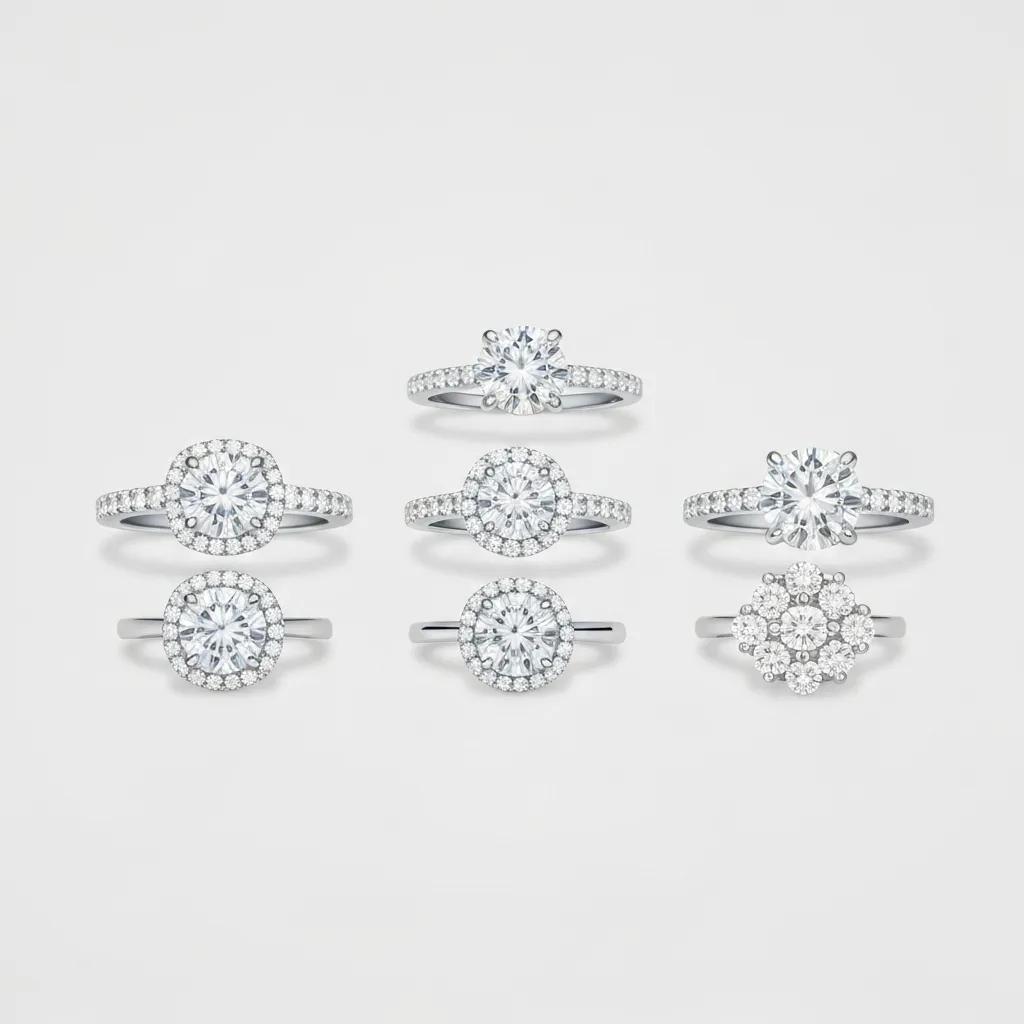
A ring setting controls perceived size and sparkle by surrounding the center stone with reflective metal and accent stones, which makes settings one of the highest-impact levers for budget shoppers. Settings work mechanically: halos and clusters add surface area and light return, solitaires highlight the center with minimal metal, and side-stone shanks can increase overall presence without a larger center stone. The practical benefit is clear—choosing the right setting often yields a larger-looking and more sparkling ring for less money than buying a bigger center stone. Below is a table mapping setting types to their visual effect and cost implications to guide selection.
| Setting Type | Effect on Perceived Size / Sparkle | Best For / Example Styles |
|---|---|---|
| Solitaire | Emphasizes center; lower metal/labor cost | Minimalist buyers wanting clean lines and lower price |
| Halo | Surrounds center with small stones to enlarge visual footprint | Small center stones that need boost in perceived size and brilliance |
| Cluster | Multiple small stones form a large visual center | Maximizing face-up size on a budget; good for vintage looks |
These setting choices show how design can stretch a budget; next we compare the three settings in detail to help you pick one that suits style and budget.
What Are the Benefits of Solitaire, Halo, and Cluster Settings?
Solitaire settings offer a clean, classic look and often cost less because they use less metal and fewer accent stones; this makes them ideal when a higher-quality, smaller center stone is preferred. Halo settings increase apparent size and sparkle by framing the center with pavé or micro-set stones, creating a stronger visual impact for smaller centers and allowing shoppers to stay under $1000 while achieving a large look. Cluster settings combine many small stones into a single striking silhouette that mimics a larger center at a fraction of the price, offering an affordable vintage or statement aesthetic. Each option trades fabrication complexity and accent-stone cost against perceived size benefit.
Understanding these trade-offs leads to metal choices that can further keep a ring under budget while maintaining durability and desired color.
Which Metal Types Are Best for Budget Engagement Rings?
Metal selection affects price, durability, and color tone; 10K and 14K gold are common budget-friendly choices that balance longevity and cost, while platinum typically exceeds our price target. The mechanism is simple: higher karat and rarer metals cost more per gram, so choosing 10K or 14K saves on the material portion of the ring and can leave more budget for a larger or better-cut stone. White gold, yellow gold, and rose gold each present different aesthetic cues—rose gold often complements warm-toned stones like morganite, while white gold emphasizes diamond brilliance. Choosing a thinner shank, simpler gallery, or lower-karat gold are practical ways to stay under $1000 without sacrificing style.
With metal and setting choices clarified, the next section explains which shapes and alternative gemstones maximize size and value.
What Diamond Shapes and Alternatives Are Best for Budget Engagement Rings?
Shape and cut control how much of the stone’s weight appears on the face, which directly affects perceived size for a given carat weight and therefore the budget-to-impact ratio. Elongated shapes like oval, marquise, and pear present larger face-up areas per carat compared to round cuts, making them cost-efficient choices for budget shoppers. Alternatives such as sapphires and morganite offer vivid color and lower price points, enabling stylistic variety while conserving budget. Below is a compact table showing shape/gemstone choices, their price efficiency, and buyer recommendations.
| Shape / Gemstone | Price Efficiency / Visual Size | Recommendation for Budget Buyers |
|---|---|---|
| Oval | High face-up area per carat | Great for maximizing apparent size on narrow fingers |
| Pear / Marquise | Very elongated face-up area | Offers dramatic look; consider protective settings for tips |
| Cushion | Good balance of size and sparkle | Often more affordable than round while still classic |
| Sapphire (color) | Lower cost for vivid color and durability | Choose small centers for daily wear and strong color impact |
| Morganite | High color payoff for low price | Ideal for romantic color; use protective bezel or halo |
Armed with these shape insights, the following subsections rank shapes and describe alternative gemstones suitable for the <$1000 market.
Which Diamond Shapes Are Most Affordable and Stunning?
Elongated shapes—oval, marquise, and pear—maximize face-up area per carat, so they are the most affordable shapes for achieving larger visual size within a set budget. Cushion cuts balance classic appeal and cost-efficiency because their faceting often delivers strong brilliance without the premium round-cut price. Round brilliants usually command higher premiums due to yield loss in cutting and market demand, so budget buyers will often favor alternative shapes to stretch dollars. When choosing shape, consider finger proportions and personal style to ensure the visual effect complements the wearer.
Selecting an elongated or cushion shape often pairs well with halo or thin-shank settings to further amplify perceived size and sparkle.
What Are the Best Alternative Gemstones Under $1000?
Alternative gemstones like sapphire and morganite deliver color-forward looks and attractive price-to-style ratios suitable for sub-$1000 rings. Sapphire combines vivid color with strong durability (Mohs ~9), making it an excellent daily-wear option for buyers seeking tradition with personality. Morganite provides a soft peach-pink hue at much lower cost, ideal for romantic designs that emphasize color over maximum hardness. Other alternatives (e.g., spinel, topaz) can be stylish and affordable but require careful setting and wear considerations; prioritize hardness and use protective settings for softer stones to ensure longevity.
Choosing durable colored stones plus protective settings keeps an alternative-gem ring both beautiful and practical for everyday wear.
Where Can You Find Curated Collections of Engagement Rings Under $1000?
Curated collections are typically found at four retailer types: budget-focused jewelers, lab-grown specialists, mass-market department jewelers, and online marketplaces that aggregate multiple sellers. These retailers use filters for price, stone type, and metal to surface sub-$1000 options quickly, and savvy shoppers should filter by "price under $1000," stone type (lab-grown, moissanite, sapphire), and setting (halo/cluster) to find high-impact rings. The practical benefit of curated collections is time savings and easier comparison shopping; they often include product specs and multiple images that aid confident buying. For shoppers who prefer an elegant, designer look with a focus on lab-grown options, Behrs.shop positions itself as an online retailer specializing in imported designer, elegantly handcrafted jewelry and accessories for women and emphasizes lab-grown diamond rings among its categories.
- Common retailer categories to check: Specialized budget brands offering ready-made value collections. Lab-grown diamond specialists emphasizing lower price points. Mass-market jewelers with frequent sale events and broad selection. Marketplaces and curated boutiques offering imported designer looks.
These categories map to different shopping experiences—next we explain how Behrs.shop fits into the landscape and financing options that can widen purchasing choices.
How Does Behrs.shop’s Affordable Engagement Ring Collection Stand Out?
Behrs.shop emphasizes an imported-designer, elegantly handcrafted aesthetic with a focus on lab-grown diamond products and complementary accessories, positioning the brand toward shoppers who want designer styling and ethical alternatives. The business model centers on e-commerce convenience and curated collections, which can simplify the discovery process for buyers prioritizing look and craftsmanship. It is important to note that Behrs.shop does not currently offer engagement rings priced below $1000—its lowest-priced engagement ring exceeds $2000—so while its UVPs align with lab-grown and designer preferences, budget buyers seeking sub-$1000 rings should use the retailer’s filters and product categories to explore related items like lab-grown diamond jewelry and consider alternative stone categories. This transparency helps set realistic expectations and directs buyers to appropriate curated options elsewhere when strict budget limits apply.
The growing popularity of lab-grown diamonds is driven by their ethical appeal and affordability, aligning with consumer desires for conscious consumption.
Lab-Grown Diamonds: Eco-Friendly and Affordable Choice for Consumers
Lab-grown diamonds will see the transformation of the global gem industry: a shift toward sustainable and ethical alternatives to natural diamonds. This study examines the impact of age on various factors interacting with consumer perceptions, beliefs, and motivations toward lab-grown diamonds. Findings The analysis of weak and statistically insignificant relationships across the tested variables showed that attitudes towards lab-grown diamonds are not significantly determined by age. These results suggest that consumer preferences are more aligned with shared values and attributes of the product, like eco-friendliness and affordability, rather than demographic factors.
Knowing inventory realities enables buyers to choose the right retailer type and determine whether financing or alternative stones better meet their priorities.
What Financing Options Make Budget Rings More Accessible?
Financing options like pay-later services help spread the cost of higher-priced rings into manageable monthly payments, and Affirm is a commonly available example that many retailers offer. Financing works by dividing the purchase price into installment payments—sometimes with interest depending on terms—so buyers can acquire a ring above their immediate budget while preserving monthly cash flow. The trade-off is total cost: financing increases the overall amount paid, so it’s wise to compare interest rates and terms before committing. For buyers balancing style and budget, financing can bridge the gap to a preferred ring, but only after reviewing the full repayment schedule and considering whether a lower-priced stone or setting may be a smarter long-term value.
Careful comparison of financing vs. selecting a lower-priced ring helps shoppers decide whether to use pay-later options or change their product choices to stay within cash budgets.
What Are the Top Tips for Buying Stunning Engagement Rings on a Budget?
Practical tactics help buyers maximize sparkle and longevity when aiming for rings under $1000: prioritize cut quality, use halo or cluster settings to enhance visual size, choose elongated shapes for bigger face-up area, and prefer 10K–14K gold for affordability. These tactics work because they reallocate budget from raw carat weight to factors that boost perceived size and brilliance. Additionally, use product filters, request clear specifications and multiple images, and confirm return and warranty policies—these steps reduce purchase risk when shopping online. Below are concrete tips and a short checklist to guide the buying process.
Key buying tips to follow:
- Prioritize cut and shape over carat weight to get more sparkle for less money.
- Use halo or cluster settings and thinner bands to increase perceived center size.
- Consider lab-grown diamonds or moissanite to maximize size and maintain durability.
- Choose 10K or 14K gold and simpler shank designs to allocate budget toward the stone.
Following these steps increases the chance of a satisfying purchase; next we offer tactical details on maximizing sparkle and addressing ethical considerations.
How Can You Maximize Sparkle and Quality Within $1000?
To maximize sparkle, always prioritize cut grade or choose stones with excellent proportions and symmetry, since cut governs light performance and perceived brilliance more than color or clarity. Use settings that increase light return—open galleries, thin prongs, and halo arrangements—so smaller centers appear lively and bright. When choosing clarity and color, accept mid-range grades that are eye-clean to save money for a better cut or larger face-up size. Finally, request multiple images and videos when buying online, and compare side-by-side product photos to confirm that the stone exhibits good sparkle in different lighting conditions.
As the jewelry industry evolves, lab-grown diamonds are increasingly recognized for their ethical production and dazzling appearance, making them a forward-thinking choice for engagement rings.
Lab-Grown Diamonds: The Future of Ethical and Dazzling Engagement Jewelry
Lab-grown diamond: such a mysterious description embodied in the association of one of the most famous gemstones on earth with the technical know-how that scientists developed through years of research. Mostly known for being one of the precious gifts to offer for a significant event such as engagement and wedding, diamonds continued to spread its admiration for the dazzling effect which convinced more than one couple. Since the luxury industry is migrating towards a more conscious way of manufacturing products and consumers are thriving towards ethical consumption and bold products, lab-grown diamond is gaining in popularity against the bleak stories of the mined ones.
These tactics let budget buyers get the most visual impact for their dollar, and they lead naturally to considering ethical and sustainability trade-offs.
What Should You Know About Ethical and Sustainable Rings Under $1000?
Ethical options at this price point are primarily lab-grown diamonds and responsibly sourced alternative gemstones; lab-grown stones typically have a smaller environmental and ethical footprint compared with mined diamonds. Look for transparency in sourcing, clear product descriptions, and any statements about manufacturing practices; these disclosures indicate a retailer’s commitment to responsible products. Bear in mind that authentic certifications and detailed grading for lab-grown stones vary, so prioritize sellers that provide clear specs and imagery. While fully traceable mined diamonds under $1000 are rare, lab-grown and colored gemstones enable ethically minded choices without sacrificing style.
Understanding these sustainability features helps pair ethical values with practical budget strategies when selecting a ring.
What Are Common Questions About Engagement Rings Under $1000?
Buyers frequently ask whether a "real" diamond is possible under $1000 and what the best alternatives are; clear, concise answers reduce purchase anxiety and guide realistic expectations. A realistic answer explains that natural diamonds under $1000 exist but involve trade-offs in size or quality, while lab-grown diamonds and moissanite offer larger visual presence for the same budget. The following Q&A sections give direct guidance and next-step recommendations for buyers deciding between small natural diamonds, lab-grown options, or alternatives.
Can You Get a Real Diamond Engagement Ring for Under $1000?
Yes, it is possible to purchase a natural diamond engagement ring for under $1000, but such rings typically feature small carat weights, lower color or clarity grades, or less ideal cuts; these trade-offs reduce visual impact. The mechanism behind the price is rarity and mining costs, so lower-priced natural diamonds often sacrifice one or more quality attributes to meet a strict budget. For buyers who want the diamond designation, consider very well-cut small stones or alternative shapes that maximize face-up size while accepting modest clarity/color. Otherwise, lab-grown diamonds or moissanite are practical choices for larger-looking centers with diamond-like properties.
Understanding these constraints helps buyers choose whether a natural diamond at that price satisfies their priorities or whether alternatives better meet expectations.
What Is the Best Alternative to a Diamond for Budget Rings?
Moissanite ranks as the top alternative for maximum sparkle and size at low cost, followed by lab-grown diamonds for diamond-equivalent properties at reduced prices, and then sapphires or morganite for color and affordability. Moissanite offers superior brilliance and a low price tag, making it ideal for buyers who prioritize flash and apparent size. Lab-grown diamonds provide the closest match to mined diamonds in hardness and optical properties but at a higher price than moissanite. Colored stones like sapphire and morganite offer distinctive looks and cost savings but require attention to durability and protective settings. Evaluate priorities—sparkle, tradition, or color—to select the best alternative for your budget.
These comparisons clarify alternative options, enabling buyers to make an informed trade-off between appearance, durability, and cost while completing their search and checkout process.
0 comments